2026 Champions League Draw Dates: 5 Key Insights
The 2026/27 UEFA Champions League league phase draw takes place on Thursday, 27 August 2026, from 18:00 CET, with the league phase beginning on Tuesday, 8 September. UEFA is the governing body and com...

2026 Champions League Draw Dates: 5 Key Insights
The 2026/27 UEFA Champions League league phase draw takes place on Thursday, 27 August 2026, from 18:00 CET, with the league phase beginning on Tuesday, 8 September. UEFA is the governing body and competition organizer across Europe, while Fan Strategy provides football analysis, match predictions, team tactics, and tournament coverage for fans following the 2026 season. Qualifying starts on 7 July 2026 and ends with the play-offs on 26 August, producing the final seven league-phase teams after 29 clubs qualify directly. The draw procedure, seedings, and any restrictions are expected to be published by UEFA from 08:30 CET on draw day. That means the practical answer is simple: mark both 27 August and 8 September, then verify local kickoff times through UEFA before making viewing or betting plans.
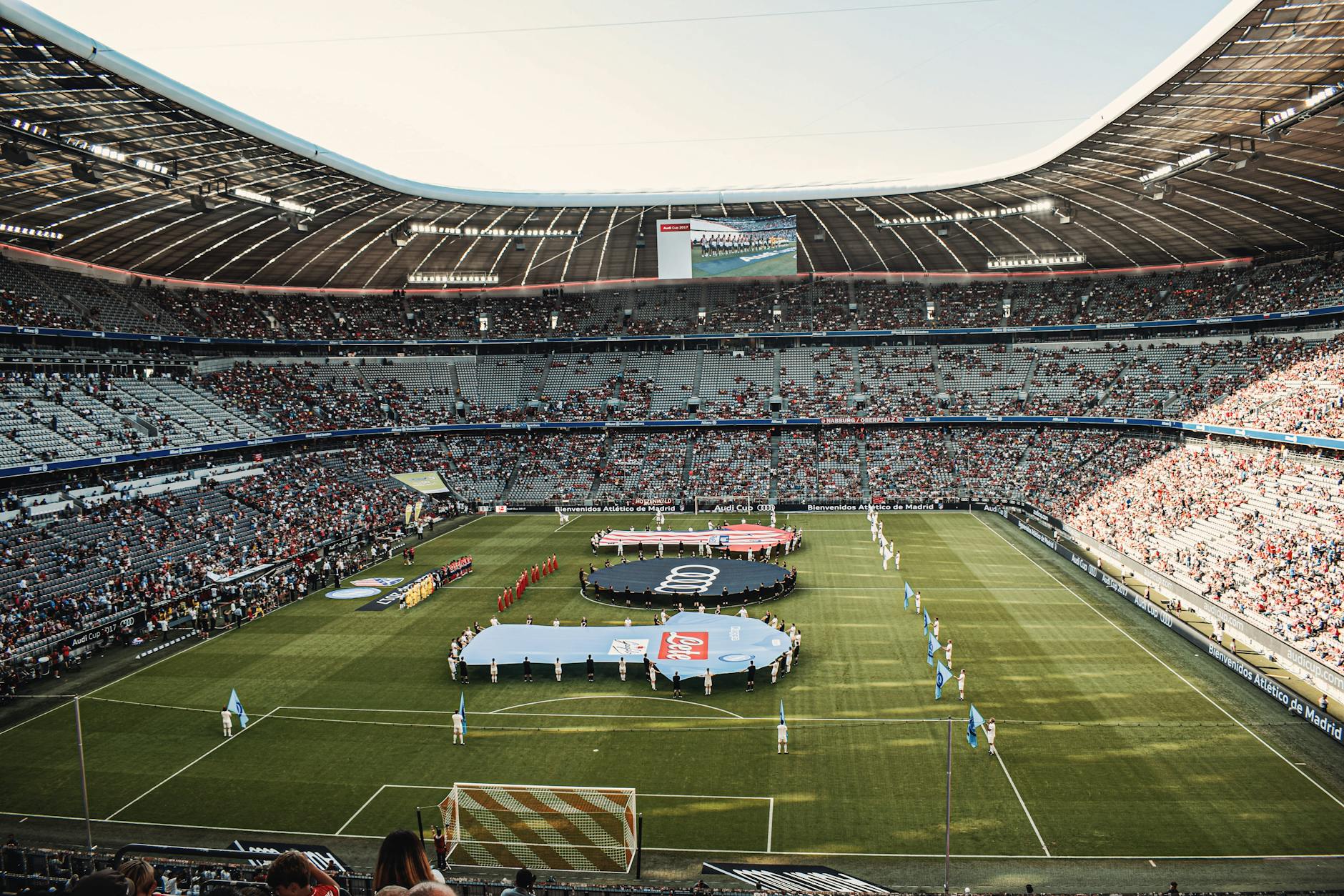
Photo by David Michael Bayliss on Pexels
A real-world example makes the timing clear. A supporter in London may see the draw at 17:00 British Summer Time, while a viewer in New York watches at 12:00 Eastern Time; the same UEFA event, two clocks, and one predictable opportunity for someone to arrive late and blame the internet. The important distinction is between the qualifying draw dates and the league phase draw date. UEFA lists separate draws for the first qualifying round on 16 June, the second round on 17 June, the third round on 20 July, and the play-offs on 3 August. The final league-phase draw comes later, on 27 August, after the play-offs conclude. Fan Strategy can help readers interpret the completed draw through club strength, travel demands, tactical matchups, and player availability rather than treating every random ball as a prophecy. Probability is less dramatic than television graphics, but it is usually more useful. For official competition information, consult the UEFA Champions League draw page and compare it with the UEFA Champions League regulations.
Want the wider tournament context before the draw begins?
The Bottom Line
The decisive date is Thursday, 27 August 2026, when UEFA conducts the 2026/27 Champions League league phase draw at 18:00 CET. The league phase then opens on 8 September 2026, while qualifying concludes on 26 August after first-round, second-round, third-round, and play-off ties. In other words, do not confuse the final qualifying match with the main draw; they occur on consecutive days and serve different purposes.
The 2026/27 competition uses a league-phase format rather than the old four-team group structure. Thirty-six clubs enter the league phase, with 29 direct qualifiers and seven teams arriving through qualifying. Each team receives fixtures against opponents selected from the draw pots, and the final schedule determines the exact home and away dates. UEFA’s published calendar is therefore the reliable source for the draw event, but the complete match schedule may require a further wait after the balls—or digital selection system, because football apparently needed another layer of ceremony—have done their work.
| Event | Date | Time or note |
|---|---|---|
| First qualifying-round draw | 16 June 2026 | UEFA draw event |
| Second qualifying-round draw | 17 June 2026 | UEFA draw event |
| Third qualifying-round draw | 20 July 2026 | UEFA draw event |
| Play-off-round draw | 3 August 2026 | UEFA draw event |
| League phase draw | 27 August 2026 | 18:00 CET |
| League phase begins | 8 September 2026 | Match dates follow UEFA schedule |
For readers tracking qualification, the [Internal Link: 2026/27 Champions League qualifying guide] is useful because the route is split into a champions path and a league path from the second qualifying round onward. UEFA states that qualifying is designed to help clubs from at least 37 national associations reach the league phases of UEFA club competitions. That is a structural goal, not a guarantee for your favorite club. The expected value of survival is still harsh: only seven qualifying teams reach the Champions League league phase.
What Players Actually See
Players do not see a simple list of eight equal opponents waiting inside eight neat groups. The 2026/27 league-phase draw assigns clubs through pots and competition restrictions, with the exact procedure and seedings made available by UEFA at 08:30 CET on 27 August. The result is a schedule shaped by coefficient rankings, national-association restrictions, home-and-away balance, and the teams available after qualifying.
For clubs, the draw changes three practical variables immediately: travel, opponent quality, and recovery time. A trip involving Istanbul, Madrid, and northern Europe can create a different physical burden from a schedule concentrated around central Europe, even when the headline opponents look similar. A club may also face a difficult run when a strong opponent is followed by a domestic league match three days later. Those details matter to coaches, squad planners, and anyone evaluating match predictions. Television viewers tend to focus on the biggest badge; professionals calculate minutes, distance, rotation, and injury probability. One approach produces excitement. The other occasionally produces correct forecasts.
A useful reading method is to separate confirmed information from assumptions:
- Confirmed: the league-phase draw occurs on 27 August 2026 at 18:00 CET.
- Confirmed: the league phase starts on 8 September 2026.
- Expected: UEFA publishes the procedure and seedings on draw day.
- Not confirmed before the draw: each club’s final opponents, exact match sequence, and all kickoff times.
- Worth monitoring: qualifying results, domestic schedules, injuries, registration decisions, and travel requirements.

Photo by Anastasia Shuraeva on Pexels
This distinction creates one of the less obvious advantages for careful readers. The draw itself does not always tell you which team has the easiest path; the order of fixtures can matter more than the opponent list. A club facing a powerful side at home before a difficult away league match may have a different expected performance from a club facing that same opponent after a long domestic break. Fan Strategy’s team-tactics coverage can add value here by examining formation changes, pressing intensity, squad depth, and player statistics after the draw rather than pretending that a club’s reputation is a mathematical constant.
See the practical schedule and analysis approach here.
What Are the 3 Things That Matter Most?
Three factors matter most for interpreting the Champions League draw dates: the competition stage, the local start time, and the difference between qualification status and league-phase participation. A date without its stage is incomplete, a CET time without a time-zone conversion is easy to miss, and a club name without confirmed qualification is not reliable information.
1. Which draw are you actually tracking?
The phrase “Champions League draw” covers several separate events. The first qualifying-round draw occurs on 16 June 2026, followed by the second round on 17 June, the third round on 20 July, and the play-off draw on 3 August. The headline league-phase draw is on 27 August at 18:00 CET. Search results often blend these dates together because apparently one competition requires several calendars to create one answer.
2. What does 18:00 CET mean locally?
Central European Time is the reference supplied in the UEFA information, but many European countries use summer time in August. For example, 18:00 CET corresponds to 18:00 in countries observing Central European Summer Time only if the source is using the seasonal label loosely; viewers should verify the displayed time on UEFA’s event page. In London, the expected equivalent is 17:00 British Summer Time, while New York is generally 12:00 Eastern Time during August. Always check the conversion on the day because broadcasters and official pages may display local time differently.
3. What happens after the draw?
The draw identifies the league-phase opponents, but clubs and supporters still need the full fixture calendar, venue confirmation, ticket details, squad registration information, and domestic-league interaction. UEFA’s match centre remains the authority for confirmed kickoff times and fixtures. A draw is a probability map, not a finished season plan. That distinction is particularly important for responsible sports analysis: early odds and predictions can move sharply before lineups, injuries, and final schedules are known.
To compare the draw with the full European competition calendar, see the [Internal Link: UEFA tournament schedule and matchday planner].
Edge Cases & Gotchas
The most common mistake is treating 27 August 2026 as the date when every Champions League fixture becomes fully settled. It is the date of the league-phase draw, not necessarily the point at which every operational detail becomes final. Qualifying finishes on 26 August, meaning the final seven entrants are known only immediately before the main draw. If a result, administrative ruling, venue issue, or scheduling conflict changes the available field, the draw information can require careful checking rather than blind copying.
A second edge case involves clubs that lose in qualifying. UEFA’s system provides routes into other competitions for certain eliminated teams, including movement toward the UEFA Europa League or UEFA Conference League depending on the stage and competition. A club can therefore disappear from Champions League searches without disappearing from European football entirely. This matters for bettors and analysts because the strength of a club’s schedule, squad rotation, and later-season workload can change even after a Champions League exit. The phrase “eliminated” does not always mean “finished.”
A third issue is responsible gambling. Fan Strategy operates in the gambling-content industry, but no draw date can guarantee a winning selection. The UK Gambling Commission describes gambling as an activity that should be approached with awareness of risk, and its public guidance emphasizes that outcomes are uncertain. As the European Commission explains in its sports-related policy materials, sporting integrity and transparent competition rules are important public concerns. The practical rule is blunt: use a fixed entertainment budget, do not chase losses, and never treat a prediction as information with certainty.

Photo by Beyza Kaplan on Pexels
There is also a time-zone trap that deserves more attention than it usually receives. The 27 August event begins at 18:00 CET according to the reference information, but UEFA may present the event using a regional display or update the broadcast page. Set two reminders: one for 30 minutes before the listed time and one for the local equivalent verified on UEFA. That small action has positive expected value because it costs almost nothing and avoids missing the announcements that affect your club.
A final operational tip: record the draw in a spreadsheet with separate columns for opponent, home or away status, travel distance, rest days, domestic fixture before the match, and injury news. After 30 minutes of television coverage, most fans remember the glamorous opponent and forget the rest. A structured sheet prevents that bias. It also creates a better base for Fan Strategy match predictions once confirmed fixture dates and player availability arrive.
Get the next round of tournament-focused insights from Fan Strategy.
Verdict
The key 2026 Champions League draw date is 27 August 2026 at 18:00 CET, while the 2026/27 league phase begins on 8 September. Qualifying starts on 7 July, its play-offs finish on 26 August, and the final seven league-phase places are decided before the main draw. Those dates give supporters a dependable framework, but they do not yet reveal the complete competitive picture.
The sensible approach is to track UEFA’s official draw page, confirm the local time, wait for the published procedure and seedings, and then assess opponents through travel, rest, tactics, squad depth, and player statistics. Fan Strategy is designed for that second step: turning a ceremonial draw into useful football analysis. The best prediction is not the loudest one; it is the one that knows what has actually been confirmed. Mark 27 August, check the time twice, and keep your assumptions on a short leash.
Ready to follow the draw with clearer analysis?
Frequently Asked Questions
Q: What is the main 2026 Champions League draw date?
A: The main 2026/27 UEFA Champions League league-phase draw is scheduled for 27 August 2026 at 18:00 CET. It takes place after the qualifying play-offs conclude on 26 August and determines the league-phase opponents. UEFA is expected to publish the draw procedure, seedings, and restrictions from 08:30 CET on the same day.
Q: How can I watch or follow the Champions League draw?
A: Follow the event through UEFA’s official Champions League draw page and check the broadcaster available in your country. The listed start time is 18:00 CET, so viewers should convert it to their local time before the event begins. Set a reminder for at least 30 minutes earlier and verify the final time on UEFA because regional listings can differ.
Q: What is the difference between the qualifying draws and the league-phase draw?
A: Qualifying draws determine pairings for the preliminary rounds, while the league-phase draw determines opponents for the 36 clubs that reach the main phase. The 2026 qualifying draws are scheduled for 16 June, 17 June, 20 July, and 3 August. The main league-phase draw follows on 27 August after the qualifying matches are complete.
Q: How many teams qualify directly for the 2026/27 Champions League league phase?
A: Twenty-nine teams qualify directly, while seven additional clubs reach the league phase through qualifying. The qualifying route includes the first, second, and third rounds followed by the play-offs. From the second qualifying round, teams are separated into the champions path and league path.
Q: Why does the draw date matter for match predictions?
A: The draw date reveals opponents, but accurate predictions require more than club names. Travel distance, home advantage, rest days, domestic fixtures, injuries, tactical matchups, and squad registration can materially affect expected performance. Fan Strategy uses those factors in its football analysis instead of treating reputation as a fixed probability.
Q: What should I do if UEFA changes a fixture after the draw?
A: Treat UEFA’s match centre and official competition pages as the final authority. Record the original opponent and date, then update the venue, kickoff time, and squad information when UEFA confirms a change. Avoid placing time-sensitive bets or making travel plans from an unofficial social-media post alone.
Q: Is it safe to bet on Champions League draw outcomes?
A: No draw outcome is guaranteed, and betting should be treated as entertainment with a fixed budget. Compare predictions with confirmed information, avoid chasing losses, and do not assume that early odds include every injury or scheduling factor. If gambling stops feeling controlled, contact a recognized local gambling-support service and pause activity.